Recycling and Sustainability
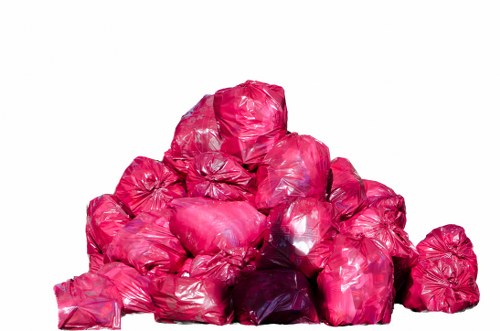 Recycling and sustainability are central to how waste is managed across our local area, from busy residential streets to commercial districts and shared buildings. By focusing on careful sorting, responsible collection, and smarter reuse, we help reduce landfill use and keep valuable materials in circulation. Our aim is to reach a 75% recycling percentage target over time, supported by practical systems that make it easier for households and businesses to separate materials correctly. This includes clear attention to boroughs approach to waste separation, where mixed recycling, food waste, and general waste streams are handled with greater precision to improve recovery rates.
We work across the community with a simple principle: the more we separate at source, the more we can recycle. That is why our recycling service prioritises clean collection methods, sorted loads, and reduced contamination. In areas with dense housing and multiple occupancies, the challenge is often not access but consistency, so we support borough-led habits such as separating glass, paper, plastics, and metals into designated streams. These small but important actions make a measurable difference to the overall recycling rate and help support broader sustainability goals.
 A key part of our approach is understanding the local infrastructure available for responsible disposal. Local transfer stations play an important role in the journey of materials, allowing waste to be consolidated and sorted before onward processing. By making use of nearby facilities, we reduce unnecessary travel and improve the efficiency of waste movement across the region. This also helps manage a wide variety of waste types, including recyclable packaging, office waste, and bulky items that need to be handled correctly rather than sent straight to landfill.
Our focus on sustainable recycling extends beyond collection alone. We actively support partnerships with charities so that reusable items can be diverted from the waste stream and given a second life. Furniture, bric-a-brac, books, textiles, and working household goods can often be passed to organisations that benefit local people while reducing waste. These charity partnerships are an important part of the circular economy, ensuring that items with remaining value are reused before they are recycled or disposed of.
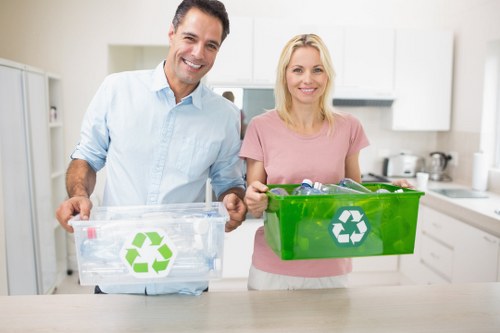
In many parts of the area, borough recycling policies encourage residents to separate materials at home, with simple distinctions such as dry mixed recycling, food waste, garden waste, and residual rubbish. This approach supports higher-quality sorting and helps processors recover more material. We align with these expectations by reinforcing good practice through our collection methods, making recycling less complicated and more effective. It is also where awareness of local housing types matters, as flats, estates, and terraced streets may need different waste handling solutions to achieve the same sustainability results.
 Another essential feature of modern recycling and sustainability work is low-emission transport. Our fleet includes low-carbon vans designed to reduce the environmental impact of collections and deliveries. These vehicles help lower fuel use and emissions while still supporting reliable service across the boroughs. By investing in more efficient vans and planning routes carefully, we can cut unnecessary miles and reduce the carbon footprint associated with everyday waste operations.
We also recognise that a successful recycling programme depends on practical handling at every stage. Materials collected from homes, workplaces, and community sites need to be prepared properly for processing. This means keeping recyclables free from contamination, ensuring waste is separated into the correct streams, and using transfer stations where loads can be managed responsibly. In areas where borough waste separation is already well established, these steps help maximise the value recovered from each collection.
The benefits of this approach are felt across the community. Better recycling performance reduces pressure on landfill, supports local environmental targets, and encourages a more resource-conscious culture. By combining charity partnerships, local transfer stations, and low-carbon vans, we create a system that is both practical and environmentally responsible. Our goal is not just to move waste, but to help materials re-enter the cycle in a way that supports long-term sustainability.
 Recycling solutions also need to reflect the character of the area they serve. In boroughs with mixed commercial and residential use, waste separation often includes a wider range of materials and more frequent collections to match demand. In neighbourhoods with schools, offices, and retail units, the emphasis may be on paper recovery, cardboard baling, and the separate handling of food waste and packaging. These local patterns shape how we deliver services and help ensure the right materials are sent to the right destination.
We continue to invest in methods that support a lower-impact future. The move toward a recycling percentage target is not just a number; it represents a commitment to better sorting, stronger reuse networks, and more responsible waste management. By using local infrastructure effectively and building on established borough practices, we can improve outcomes for both the environment and the community. Every separated load, every reused item, and every reduced journey contributes to that progress.
 Our sustainability and recycling work is designed to be adaptable, efficient, and locally relevant. Whether materials are routed through transfer stations, redirected to charity partners, or collected in low-carbon vans, each step is chosen to reduce waste and improve recovery. The result is a practical system that supports cleaner streets, smarter resource use, and a more resilient future for the area.