Commercial Waste Collection in Waste Removal
If your business needs dependable, tidy, and flexible commercial waste collection in Waste Removal, you’re in the right place. Local businesses produce waste every day, from packaging and office paper to kitchen waste, shop fit-out debris, and bulky items that can’t be left sitting around. A well-organised collection service helps you keep your premises safer, cleaner, and easier to manage, while saving your team time they could spend on customers, staff, and day-to-day operations.
Whether you run a shop on a busy high street, manage an office suite, operate a café, or oversee a mixed-use property with shared bins and regular uplift needs, a local commercial waste removal service can make a noticeable difference. The right arrangement should be practical, predictable, and suited to how your premises actually operate, including access limitations, loading bay rules, and collection timing that works around opening hours.
Our approach is straightforward: we help businesses dispose of waste responsibly, efficiently, and in a way that fits the site. From one-off clearances to scheduled pickups, local customers value a team that understands the area, knows how to work around tight lanes and shared parking, and can deal with a wide range of waste streams without causing disruption.
Why local businesses choose commercial waste collection
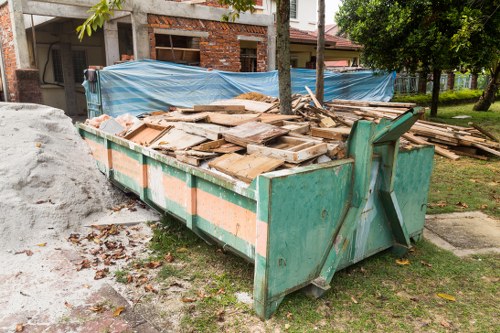
Businesses in Waste Removal need a service that does more than simply take rubbish away. They need commercial waste collection that supports the daily rhythm of the workplace. In practical terms, that means having waste lifted on time, bins emptied before overflow becomes a problem, and a clear process for handling mixed materials that build up quickly in commercial settings.
Local customers often tell us the biggest challenge is consistency. Waste levels can vary from week to week depending on trading patterns, deliveries, stock turnover, customer volume, and seasonal demand. A local service helps because it can be adapted to those changes, rather than forcing your business into a rigid arrangement that no longer fits.
There is also the matter of access. Many premises in and around Waste Removal are not designed for large vehicles or easy loading. Narrow roads, shared courtyards, pedestrianised areas, rear alley access, and limited parking all affect how waste should be collected. A team familiar with the locality can plan for those conditions and keep the process smooth.
What our commercial waste removal service covers
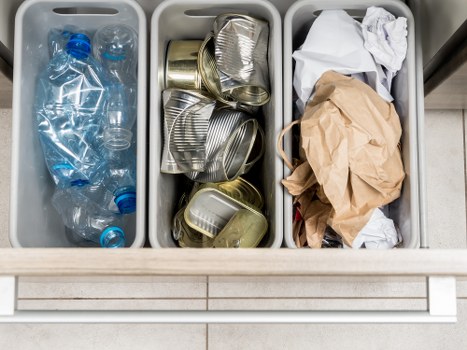
Commercial waste collection can include far more than a simple bin emptying. Different businesses produce different waste types, and the most useful service is one that can handle a broad range of materials safely and efficiently. That can include day-to-day operational waste, bulky items, recyclable materials, and waste from occasional clear-outs or refurbishments.
Typical commercial waste and waste removal services may cover:
- Office waste such as paper, packaging, cardboard, and unwanted furniture
- Retail waste including packaging, displays, shelving, and stockroom clutter
- Hospitality waste from cafés, restaurants, pubs, and takeaway premises
- Light industrial waste from workshops, storerooms, and small production sites
- Property management waste from communal bins, vacant units, and end-of-tenancy clearances
- Bulky items, broken equipment, and mixed non-hazardous commercial rubbish
Important: some waste types require specialist handling or separate arrangements. If you are unsure whether your items can be collected, it is always best to ask before booking so the team can advise on the safest and most suitable approach.
Local commercial customers we help every week
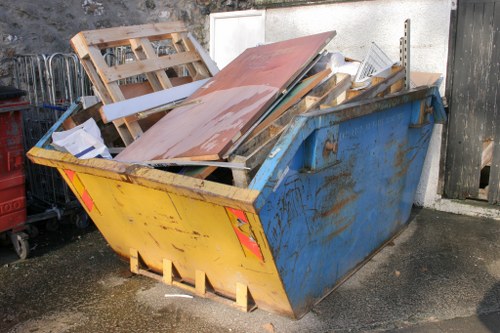
One reason businesses prefer a nearby provider is that the service can be tailored to local property types. Waste Removal includes a mix of commercial units, converted buildings, high-street premises, office buildings, industrial-style spaces, and homes adapted for business use. Each one has different waste issues and access requirements.
We regularly help:
- Offices and shared workspaces that need regular paper, packaging, and furniture removal
- Retail stores with stockroom overflow, cardboard build-up, and display disposal needs
- Hospitality venues that must stay clear, hygienic, and easy to operate
- Landlords and letting agents handling end-of-tenancy or void-property waste
- Trades and contractors needing clearance after installations, strip-outs, or fit-outs
- Schools, clinics, and community premises dealing with routine waste uplift and occasional bulky disposal
Local commercial waste collection is particularly valuable in properties where waste storage is limited. Some buildings have only a small yard, a shared bin store, or no easy rear access. In those situations, timing and on-site coordination matter just as much as vehicle capacity.
How commercial waste collection works
A simple process designed around business needs
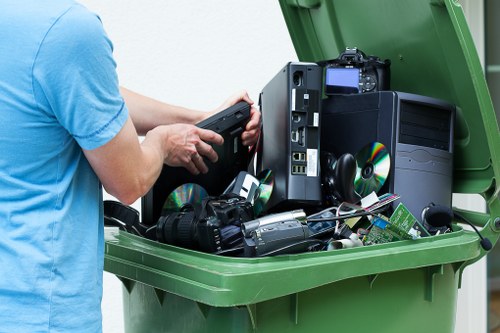
The process should be easy to understand from the beginning. Most businesses want a service that is clear, quick to arrange, and not disruptive to their staff or customers. A good local team will ask the right questions up front so the collection can be planned properly.
Here is what the usual process looks like:
- Initial enquiry – you explain the type of waste, where it is located, and how much needs removing.
- Waste assessment – the team identifies the most suitable collection method and any access considerations.
- Booking and scheduling – a time is arranged that works around business hours, deliveries, and site rules.
- Collection day – the crew arrives, loads the waste safely, and clears the agreed items with minimal disruption.
- Responsible disposal – collected waste is taken away for appropriate sorting and disposal.
For many local businesses, the best arrangement is a recurring uplift that keeps the site under control. For others, a one-off removal is enough after an office move, shop refit, or seasonal clean-out. The service should always fit your actual needs rather than forcing you into an unsuitable schedule.
What is included in a commercial waste removal visit
Practical help from start to finish

When you arrange commercial waste collection in Waste Removal, it helps to know what the visit typically includes. While exact details depend on the waste type and the premises, customers usually want a service that covers the lifting, loading, and removal of agreed items without adding hassle to the working day.
A standard commercial waste removal visit may include:
- Collection of agreed commercial waste from inside or outside the premises
- Manual handling of bulky or awkward items where safe and appropriate
- Loading from basements, rear yards, storage rooms, or loading areas where access allows
- Separation of reusable, recyclable, and general waste where possible
- Tidying of the cleared area so the space is ready for use again
- Clear communication before arrival so staff can prepare the site
Note: if your premises has stairs, restricted access, no lift, or a narrow entrance, it is worth highlighting this early. That helps the team plan the visit properly and avoid delays on the day.
Why choosing a local company matters
Faster response, better access planning, and a more personal service
There is a real advantage in choosing a local provider for waste removal and commercial waste collection. A nearby team is more likely to understand the layout of local roads, the usual traffic pinch points, the common parking restrictions, and the practical realities of accessing commercial premises in the area.
This matters because commercial waste is not just about volume; it is about timing, access, and reliability. If you are running a customer-facing business, you do not want waste left blocking entrances, stacked in corridors, or sitting in a yard for too long. A local team can often arrange collections more flexibly and with less disruption.
Local knowledge also helps with different property types. In mixed commercial and residential streets, for example, collections must be carried out with care for neighbours, staff, and visitors. In busier trading areas, crews need to work efficiently and respect loading times, shared access points, and site rules.
Commercial waste types and common challenges
Every business generates waste differently
One of the reasons businesses seek professional waste collection is that commercial waste varies so much from site to site. A café may need frequent food-related waste handling and packaging removal, while an office may mainly need cardboard, paper, old files, and redundant furniture taken away. A shop may need regular stockroom clear-outs, and a contractor may need post-project waste removed quickly.
Common challenges include:
- Overflowing bins during busy periods or before a scheduled pickup
- Limited storage space for waste in smaller units or shared premises
- Mixed waste streams that need sorting before disposal
- Access issues such as narrow hallways, step access, or no rear entry
- Time pressure when a site needs to be cleared before opening, after closing, or ahead of a handover
Understanding these common issues is the first step to arranging a waste removal service that actually works for your business. The aim is to keep operations moving while reducing clutter, mess, and unnecessary stress for staff.
Areas covered around Waste Removal
Serving nearby commercial districts and local property clusters
Commercial customers often need a waste service that covers more than one postcode area or business park. Depending on your location, that may include nearby shopping streets, industrial estates, office developments, mixed-use developments, and business premises in surrounding neighbourhoods. A local service is especially useful when your company has multiple sites or occasional collection needs across different parts of town.
Areas covered may include nearby commercial corridors, trading estates, town-centre premises, retail parades, serviced offices, workshop units, and local hospitality venues. Because access and parking can vary from one street to the next, it is helpful to work with a team that can adapt to each site rather than treat all collections the same.
If your business is slightly outside the main centre, that should not automatically make waste collection difficult. What matters is whether the provider can plan the route, reach the premises safely, and remove the waste without creating issues for customers or neighbouring properties.
How to prepare for your collection
A short checklist for a smoother visit
Good preparation can make the collection quicker, safer, and more efficient. It also helps the team understand exactly what needs taking away, which is especially useful for commercial premises where waste may be spread across several rooms or stored in different locations.
Before the collection, it helps to:
- Separate the waste you want removed from items you intend to keep
- Make sure access routes are clear, including corridors, stairwells, and doorways
- Let staff know the collection time so they can avoid blocking the pickup area
- Point out any fragile surfaces, security measures, or site restrictions
- Highlight bulky, awkward, or heavy items in advance
- Check whether waste is stored upstairs, in a basement, or behind locked doors
Top tip: if your premises has limited parking or a very tight loading space, it is worth mentioning this when you book. That helps avoid delays and makes sure the collection vehicle is suitable for the site.
Pricing factors for commercial waste collection
What affects the cost of a business waste pickup
Customers often want to know what influences the price of commercial waste removal. While exact costs depend on the job, the main factors are usually straightforward. A professional service should be transparent about how the job is assessed and what information is needed to provide a fair quote.
Common pricing factors include:
- Volume of waste – how much needs removing and how much vehicle space it requires
- Waste type – whether the material is general commercial waste, recyclable material, bulky furniture, or mixed items
- Access conditions – stairs, tight entrances, limited parking, loading restrictions, or longer carrying distances
- Labour involved – how long it takes to load and whether items are heavy or difficult to move
- Collection timing – regular scheduled collections versus one-off or urgent removal needs
- Site complexity – multi-floor buildings, shared access, or special instructions from building management
Requesting a quote is usually the best way to understand what is involved. It also gives you the chance to explain any site-specific issues so there are no surprises on collection day.
Why businesses benefit from regular waste collections
Keeping premises cleaner, safer, and easier to manage
Regular collections are often the most effective choice for businesses that produce waste every day. Instead of letting rubbish build up and become a nuisance, you can keep the site in good order with planned uplifts that fit trading patterns and occupancy levels.
This can help with:
- Cleaner customer areas that support a better first impression
- Safer walkways and storage spaces with less clutter around staff
- Better organisation in stockrooms, offices, and rear yards
- Reduced stress for employees who no longer need to manage overflowing waste
- More predictable routines for businesses that need dependable service
Regular commercial waste collection in Waste Removal is especially useful for businesses with limited indoor storage. If you work from a compact unit or a shared building, keeping waste under control can make a big difference to how the entire premises feels and functions.
When a one-off commercial clearance makes sense
Ideal for moves, refurbishments, and seasonal changes
Not every business needs a recurring pickup. In many cases, a one-off commercial waste collection is the best option. This is often the case after office relocations, shop refits, short-term closures, end-of-lease changes, stockroom reorganisation, or a major clear-out of old equipment and packaging.
One-off collections are useful when:
- You need to clear a workspace before handover or renovation
- Old desks, chairs, shelving, or fixtures need to be removed
- A storeroom, cellar, or back office has become overloaded
- You are preparing for a new season and need to create space
- Waste has accumulated after a short-term project or event
These jobs often benefit from a local team because timing matters. A business may need the area cleared before contractors arrive, before trading resumes, or before a landlord inspection. In those cases, flexibility and punctuality are just as important as the collection itself.
Responsible handling and disposal
Good waste removal should never be careless
Commercial customers want reassurance that waste is being handled properly. While the exact disposal route depends on the material, a trustworthy waste service should aim to sort and manage collected items responsibly, with care for the environment and with proper attention to what can be reused or recycled.
That matters not only for compliance, but also for the reputation of your business. Many local companies want to know that the waste leaving their site is being managed in a sensible, professional way. It is part of running a tidy, well-managed workplace.
If you have items that are unusual, oversized, or potentially regulated, raise this at the booking stage. That makes it easier to plan the collection correctly and avoid delays or misunderstandings on the day.
Frequently asked questions
Common questions from local business owners
Can you collect waste from small business premises?
Yes. Many commercial waste collections are for smaller premises such as independent shops, offices, cafés, salons, and mixed-use units. The service can be adapted to the size and layout of the site.
Do I need to sort everything before collection?
It depends on the type of waste and how it is stored. Sorting some items in advance can make the visit faster, but a lot of customers simply need help removing mixed commercial waste from a single location. If sorting is necessary, you can be advised before the visit.
Can collections be arranged around business hours?
In many cases, yes. This is often important for customer-facing premises, loading restrictions, or sites where staff need to stay focused on service. It is best to discuss timing early so the collection can be arranged properly.
What if my premises has poor access or no parking?
That is common in many local areas. Narrow roads, loading restrictions, and limited parking can usually be managed if they are mentioned in advance. Good planning helps the crew bring the right vehicle and allow enough time.
Is commercial waste collection suitable for one-off jobs?
Absolutely. Many local customers book waste removal for a single clearance after a move, refurbishment, or big tidy-up. You do not need to sign up for a long-term arrangement if you only need occasional help.
How do I request a quote?
Requesting a free quote is usually the simplest way to get started. Share the type of waste, approximate amount, access details, and preferred timing so the service can be priced accurately and arranged efficiently.
Choosing the right commercial waste collection partner
What local customers should look for
When comparing waste removal options, it helps to think beyond just whether a company can take the waste away. The better choice is usually the one that makes the process easy for your business, respects your site, and understands the pressures of local commercial life.
Look for a provider that offers:
- Clear communication before the visit
- Flexible collection options for different business types
- Experience with local access and parking challenges
- A practical attitude toward bulky, awkward, or mixed waste
- Prompt collections that fit your schedule
- A customer-first approach that understands busy premises
For local businesses, the difference between a poor service and a good one is often how little disruption the collection causes. A dependable team should make the job feel simple from the first enquiry to the final uplift.
Book your commercial waste collection today
Make waste one less thing to manage
If you are looking for commercial waste collection in Waste Removal, now is a good time to sort it out. Whether you need a one-off clearance, a recurring pickup, or support with a commercial waste build-up that has become difficult to manage, a local service can help you move forward quickly and cleanly.
From offices and shops to cafés, workshops, and managed properties, the right waste removal service keeps your site clearer, safer, and more efficient. It also gives you peace of mind that the waste is being handled by people who understand local premises, access limits, and the need to work around your business.
Contact us today to request a free quote, discuss your waste type, and arrange a collection time that suits your premises. Book your service now and keep your business running without unnecessary clutter or delay.